


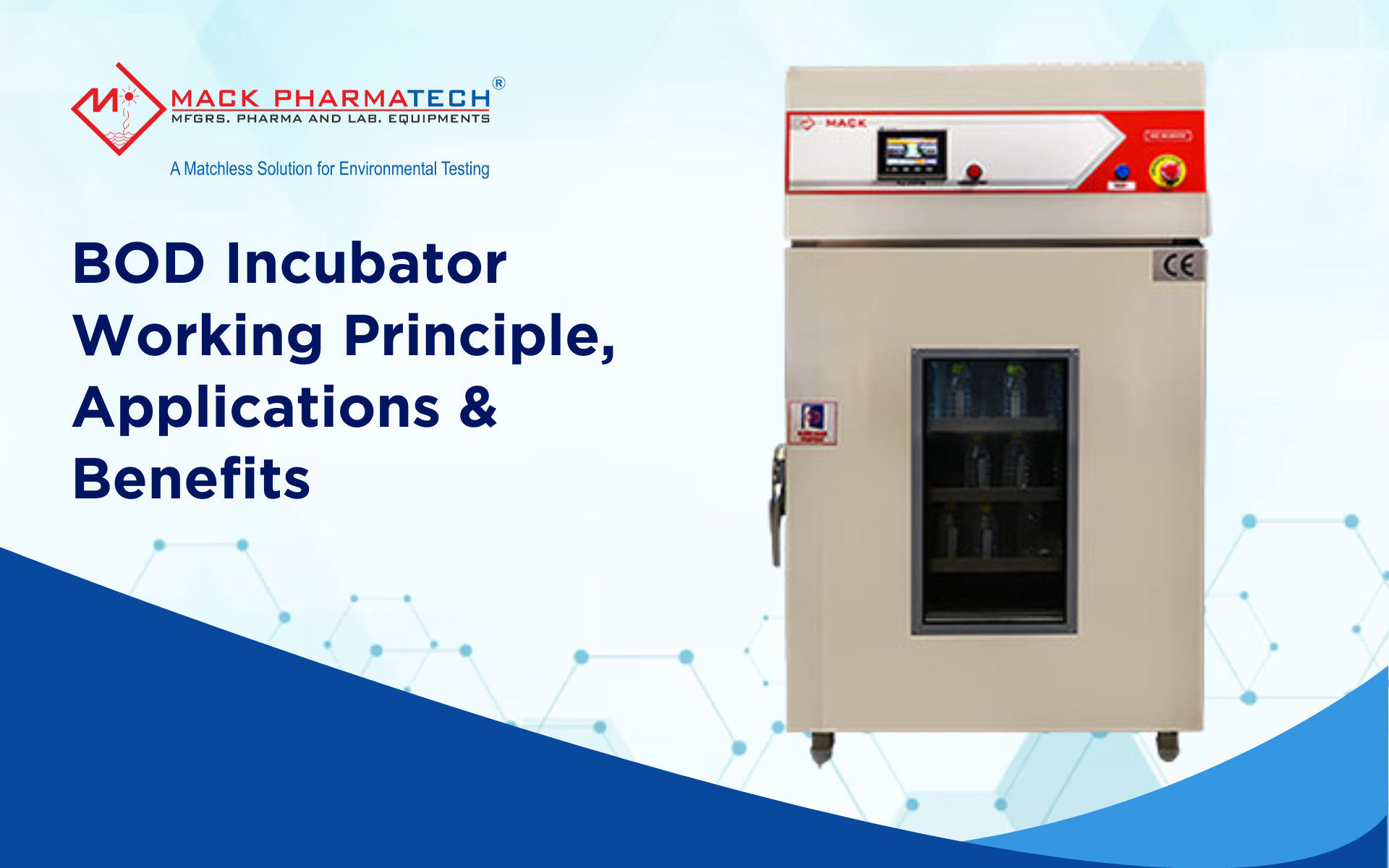
A BOD incubator is a laboratory device designed to maintain controlled environmental conditions for measuring the biochemical oxygen demand of water and supporting microbial growth.
When it comes to laboratory equipment, few tools are as versatile and essential as the BOD Incubator. Whether you’re testing water quality, growing microbial cultures, or ensuring the stability of pharmaceutical products, this unassuming device plays a critical role in achieving accurate and reliable results.
But what exactly is a BOD incubator, and why is it so important?In this guide, we’ll dive into the BOD incubator working principle, explore its applications, and highlight why it’s a must have for modern labs.
BOD Incubator
A BOD Incubator (Biochemical Oxygen Demand Incubator) is a specialized piece of lab equipment designed to maintain a controlled environment for biological and chemical processes. Its primary purpose is to measure the Biochemical Oxygen Demand (BOD) of water samples, which indicates the amount of oxygen consumed by microorganisms as they break down organic matter.
However, BOD incubators are not limited to environmental testing. They’re also widely used in pharmaceutical, food, and research laboratories for applications like microbial culturing, stability testing, and more.
How Does BOD Incubator Works?
At its core, a BOD incubator creates a stable environment by controlling temperature, humidity, and air circulation. Here’s a breakdown of BOD Incubator working principle:
1.Temperature Regulation:
The incubator uses a thermostat and heating/cooling system to maintain a consistent temperature, typically around 20°C for BOD testing.
2. Humidity Control:
Some models include humidity control to prevent samples from drying out.
3. Air Circulation:
A built-in fan ensures even distribution of temperature and humidity throughout the chamber.
4. Insulation:
High-quality insulation minimizes heat loss, ensuring energy efficiency and temperature stability.
This combination of features creates an ideal environment for biological and chemical processes to occur reliably.
BOD Incubator Working Principle in Action
-
Setup: A water sample is prepared and placed inside the incubator for a five-day test.
-
Temperature Control: The PID controller is programmed, usually at 20°C, and the incubator powers the heating/cooling systems to achieve stability.
-
Chamber Conditions: The axial fan ensures an even distribution of temperature across the chamber.
-
Microbial Activity: Over time, microorganisms in the sample consume dissolved oxygen as they break down organic matter.
-
Oxygen Measurement: After five days, the drop in dissolved oxygen is measured to calculate the BOD value, which reveals the concentration of biodegradable organic matter.
This is the foundation of the BOD incubator working principle in real-world laboratory use.
Key Components and Their Functions
Modern BOD incubators come equipped with advanced features that make them more efficient and user-friendly. Here are some standout features to look for:
-
PID Temperature Controller:
A digital controller that regulates heating and cooling to maintain set temperature accurately. -
Heating and Cooling Systems:
A combination of a heating element and refrigeration system (with a compressor) balances conditions regardless of ambient temperature. -
Axial Fan:
Circulates air evenly within the chamber, preventing temperature fluctuations or dead zones. -
Temperature Sensor:
Constantly monitors chamber conditions and relays data to the PID controller for automatic adjustments. -
Insulated Chamber:
Minimizes external heat transfer, maintaining a stable internal environment.
Uses of BOD Incubator
BOD incubators are incredibly versatile and find applications in a variety of industries. Here are some of the most common uses:
1. Environmental Testing
- BOD Testing: Measures the oxygen demand of water samples to assess pollution levels.
- Wastewater Treatment: Monitors the efficiency of treatment processes.
2. Pharmaceutical Industry
- Stability Testing: Ensures drugs and vaccines remain effective under specific conditions.
- Microbial Culturing: Supports the growth of microorganisms for research and quality control.
3. Food and Beverage Industry
- Shelf-Life Testing: Determines how long food products remain safe and fresh.
- Microbial Analysis: Detects contamination in food samples.
4. Research and Development
- Cell and Tissue Culture: Provides a controlled environment for biological studies.
- Chemical Reactions: Used for experiments requiring precise temperature control.
Why Every Lab Needs a BOD Incubator
If you’re still on the fence about investing in a BOD incubator, here are some compelling reasons to consider:
- Accuracy and Reliability: Ensures consistent conditions for reproducible results.
- Regulatory Compliance: Meets standards like ISO, GMP, and EPA guidelines.
- Versatility: Suitable for a wide range of applications across industries.
- Cost-Effective: Reduces the need for manual monitoring and minimizes errors.
- Future-Proof: Advanced models come with smart features like remote monitoring and data logging.
Choosing the Right BOD Incubator for Your Lab
With so many options available, selecting the right BOD incubator can feel overwhelming. Here’s a quick guide to help you make the best choice:
- Temperature Range: Ensure the incubator can maintain the temperatures required for your applications.
- Chamber Size: Consider the volume of samples you’ll be working with.
- Humidity Control: If your experiments require humidity regulation, opt for a model with this feature.
- Energy Efficiency: Look for models designed to minimize power consumption.
- Safety Features: Over-temperature protection, alarms, and backup systems are essential for safe operation.
- Budget: Balance cost with the features and durability you need.
Real-World Applications of BOD Incubators
To give you a better idea of how BOD incubators are used, here are a few real-world examples:
- Water Treatment Plants: Monitoring the efficiency of wastewater treatment processes.
- Pharmaceutical Labs: Testing the stability of vaccines and medications.
- Food Safety Labs: Analyzing microbial contamination in food products.
- Research Institutions: Conducting experiments on cell cultures and chemical reactions.
The Future of BOD Incubators
As technology continues to evolve, so do BOD incubators. Here are some trends shaping the future of this essential lab equipment:
- Smart Technology: Integration with IoT for remote monitoring and control.
- Sustainability: Energy-efficient designs and eco-friendly materials.
- Modularity: Customizable configurations to suit different lab needs.
- Advanced Data Logging: Real-time data collection and analysis for improved accuracy.
The BOD incubator working principle may seem simple, but its impact on water quality testing, pharmaceutical research, food safety, and environmental monitoring is profound. From ensuring cleaner water to developing life-saving drugs, this essential tool continues to advance science and safeguard public health.
At Mack Pharmatech, we understand the importance of reliable and efficient lab equipment. That’s why we offer a range of BOD incubators designed to meet the needs of modern laboratories. Whether you’re conducting environmental tests, pharmaceutical research, or food safety analysis, our incubators deliver the performance and precision you need.
Ready to take your lab to the next level? Explore our collection of BOD incubators today or reach out to our team for personalized recommendations.